
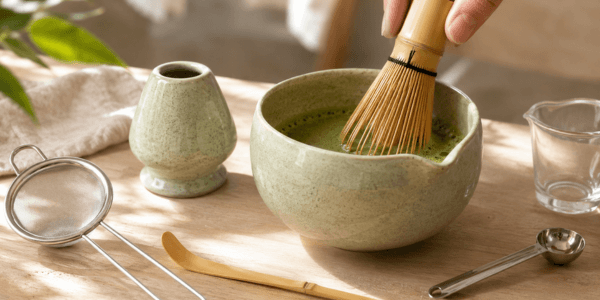
Picture a kitchen counter warmed by early afternoon light, the kind that turns pale wood into something closer to honey. Somewhere close, a kettle exhales its last little curl of steam. For many of us, this is the hour when the day finally loosens its grip — dishes done, messages answered, nothing left to chase. It’s a feeling a lot of kitchens know well: the quiet pull toward something small and deliberate. A matcha whisk set waits nearby, unhurried, almost patient, as if it already understands that what’s about to happen isn’t really about tea. It’s about the pause.
Where the Afternoon Begins to Soften
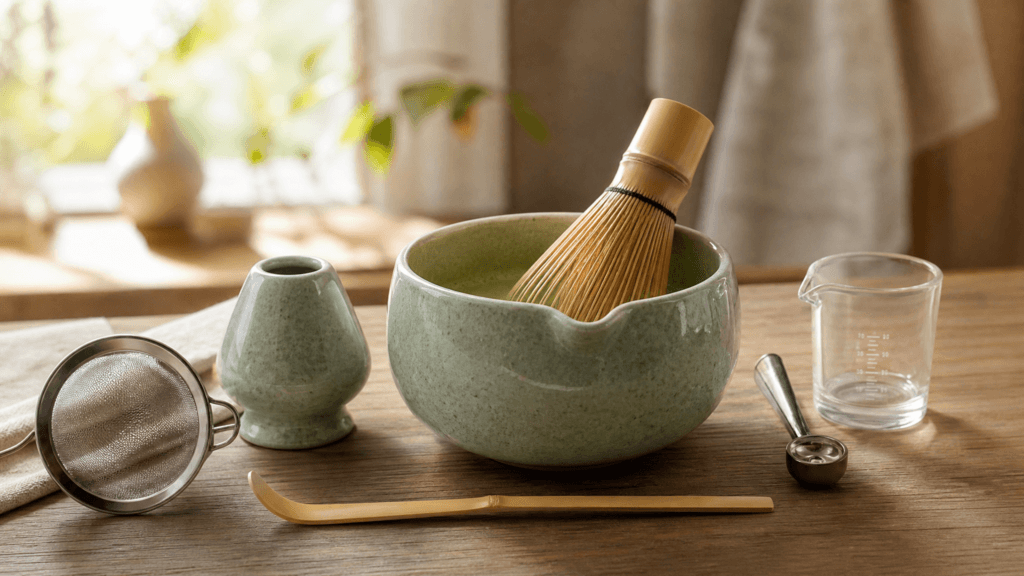
There’s something about a warm, slow afternoon that asks for a ritual rather than a routine. Imagine the low clink of a ceramic bowl settling onto the counter, its mottled green glaze catching the light like moss after rain. Beside it, a bamboo whisk rests in its holder stand — the chasen, tines still and waiting, a small sculpture of patience.
We love the idea of a bowl designed with a gentle spout, the kind that lets a stream of pale green tea pour without a single drop astray. A sifter, a scoop, a measuring spoon and cup sit close by — not as clutter, but as the quiet cast of a small performance. Nothing about this moment asks to be rushed. The tools simply wait for hands that are ready to slow down.
The Ritual, One Careful Motion at a Time
Owners often describe soaking the bamboo whisk in warm water first, coaxing its fine tines into flexibility before the first stroke. It’s a small act of preparation that seems to belong to the ritual itself — a reminder that good things are rarely instant.
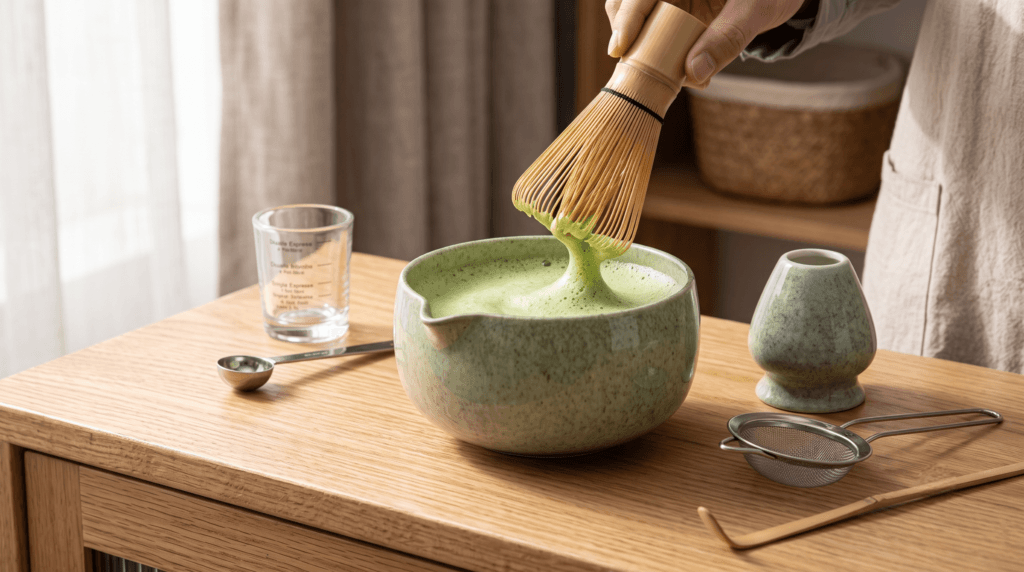
Based on what we’ve found, the sifter is there to catch any stubborn clumps, smoothing the matcha powder into something silkier before water ever touches it. Then comes the whisking — quick, light, almost weightless wrist motions that coax a soft green foam to the surface. Reviewers frequently mention how the eagle-beak spout on the ceramic bowl makes pouring feel unusually controlled, a small kindness for anyone whose hands are still getting used to the motion.
There’s no need to get it exactly right. The ceramic holder keeps the whisk upright and drying between uses, ready for the next quiet afternoon. What drew us to this kind of set is how little it demands and how much it gives back — a gentle helper for a ritual that rewards attention rather than speed.
Why This Kind of Pause Matters
A lot of kitchens hold moments like this without anyone naming them — the five minutes before dinner, the stretch after a long call, the hush of a house when everyone else has stepped out. Whisking matcha by hand doesn’t ask for much space or time, but it asks for presence, and that’s a rarer thing these days.
For many of us, that’s the real appeal: not the tea itself, but the permission to do one small thing slowly. A quiet essential like this doesn’t try to impress. It simply sits in the kitchen, ready, and lets the ritual do the rest — a little treasure for whoever needs five green, foamy minutes of calm.
Frequently Asked Questions
Do I need to soak the bamboo whisk before using it? Yes — soaking the chasen in warm water for a few minutes is typically recommended, as it helps the bamboo tines become more flexible and less likely to snap during whisking.
What’s usually included in a matcha whisk set like this one? Sets like this one are typically designed with a ceramic bowl, a bamboo whisk, a whisk holder or stand, a sifter, a scoop, and a measuring spoon and cup — everything needed for the ritual in one gathered kit.
Why does the bowl have a spout? The spout, often described as an “eagle-beak” shape, is designed to give a cleaner, more controlled pour once the matcha has been whisked, so less ends up on the counter.
Is this kind of set good for someone new to matcha? It’s often described as approachable for beginners, since each tool has a clear role — the sifter smooths the powder, the whisk builds the foam, and the holder keeps everything tidy between uses.
How should the ceramic and bamboo pieces be cared for? Owners generally suggest hand washing and air-drying the bamboo whisk to preserve its shape, while the glazed ceramic pieces tend to be simple to wipe clean after each use.
A Small Closing Thought
Some rituals don’t need an occasion. They just need a little light, a little quiet, and a bowl that’s been waiting patiently on the counter. Whether it’s an afternoon, there’s something steadying about tools built for one unhurried task at a time.
We keep coming back to this kind of scene — not for the tea, but for the five minutes it asks us to give it. May your own afternoon find a version of this pause, whenever it’s ready to arrive.
Curated with care, Jad & Cyprien