
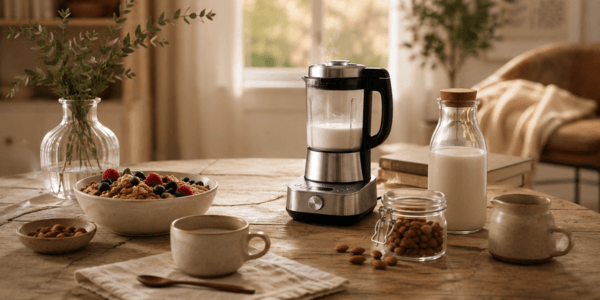
Here’s the thing about mornings: they set the tone for everything after. If you’ve been eyeing a milk maker machine — the kind that turns almonds, oats, or cashews into fresh milk right on your counter — you’ve probably also wondered if it’s actually for you, or just another appliance that ends up pushed to the back of a cabinet by March.
We get that question a lot. So instead of listing specs and hoping you figure it out, we want to walk through who tends to love this kind of machine, who might be happier without one, and how you can tell which camp you’re in. No pressure, no hype — just an honest look at where this device fits into a real kitchen and a real life.
What a Milk Maker Machine Actually Does
At its simplest, a milk maker machine blends a base ingredient — usually raw nuts, oats, or seeds — with water, then filters (or doesn’t, depending on the model) the mixture into a smooth, pourable milk. Some versions add a heating function, so you can go from pantry ingredients to a warm pour in one cycle. Others focus purely on speed and leave temperature to you.
Compared to store-bought cartons, the appeal is mostly about freshness and control. You decide the ratio of water to almonds or oats, skip the stabilizers some store brands lean on, and taste the difference within minutes of blending. It’s not a replacement for every dairy or plant-based product in your fridge — it’s a specific tool for a specific habit, and that habit is worth understanding before deciding if it belongs on your counter.
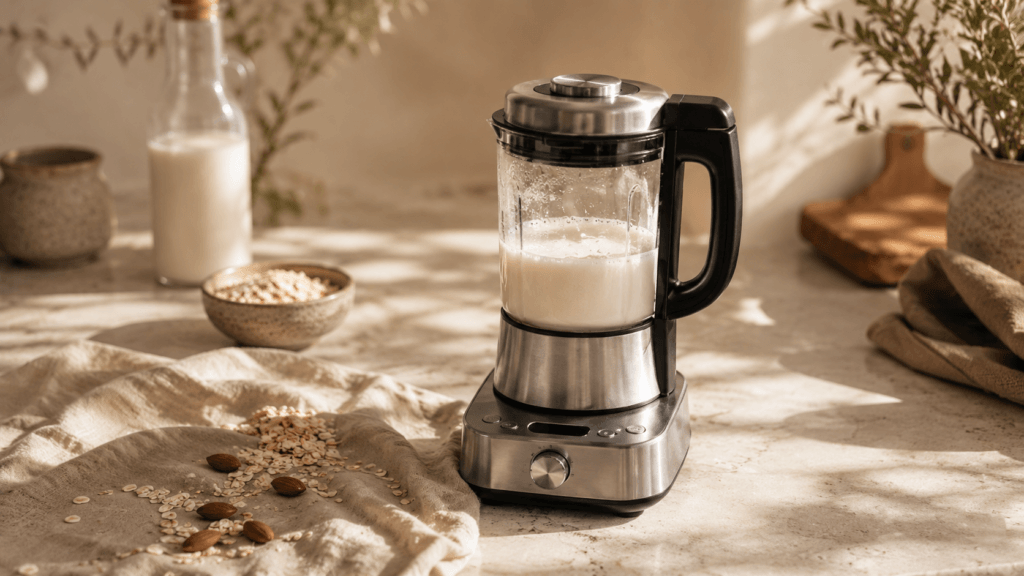
The Kind of Mornings Where This Machine Shines
If your mornings already involve a blender, a favorite mug, and maybe a slow pour of oat milk into coffee, a milk maker machine tends to slot in naturally. It suits people who already have a rhythm around breakfast — the ones who wake up ten minutes early on purpose, not the ones scrambling out the door.
It also tends to suit households leaning into plant-based eating, whether that’s a full lifestyle shift or just cutting back on dairy a few days a week. Same goes for anyone managing a dairy sensitivity who’s tired of reading labels on every carton at the store.
Worth noting: batch habits matter here too. If you like prepping on Sunday and coasting through the week — milk in the fridge, ready to pour — this fits that pattern well. Home café enthusiasts, the kind who already own a frother or a pour-over setup, often find a milk maker machine becomes a natural extension of what they’re already doing rather than a strange new gadget.
And if you genuinely enjoy the process itself — the sound of nuts breaking down, the smell of warm oat milk, that small satisfaction of having made something — that alone is often reason enough.
Signs a Milk Maker Machine Might Not Be for You
On the other hand, if you buy one carton of milk every couple of weeks and that’s plenty, a machine like this probably won’t earn its counter space. There’s no shame in that — some habits just aren’t for everyone, and store-bought works fine for plenty of people.
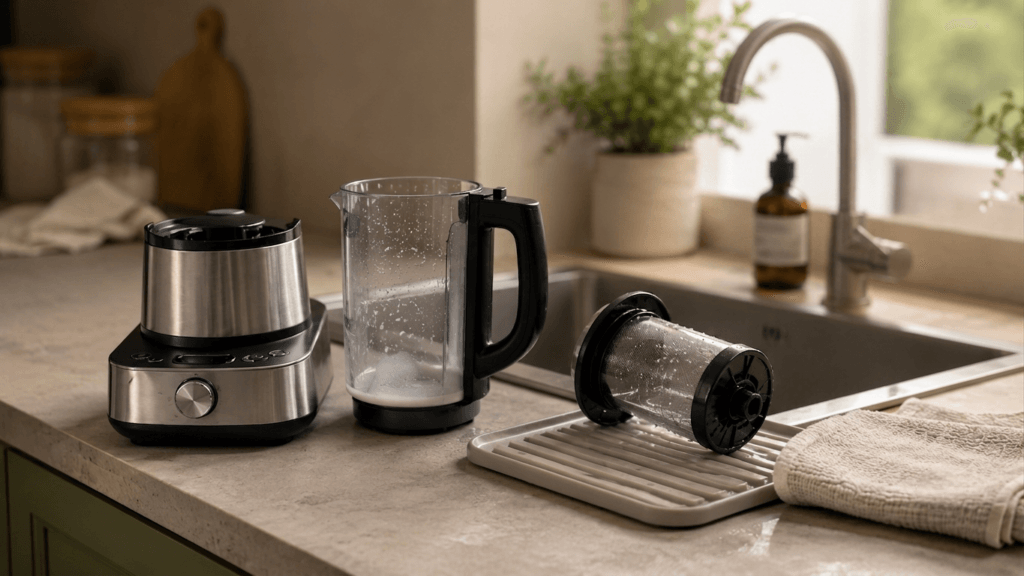
If we’re being real, cleanup is the detail that trips people up most. Every model needs rinsing, and some need actual scrubbing of a mesh filter or blending jar. If cleaning a blender already feels like a chore on busy mornings, add that friction here too before deciding.
Small kitchens matter as well. These machines aren’t huge, but they do need a spot on the counter (or easy reach in a cabinet) to actually get used — appliances that live at the back of a cupboard rarely earn their keep. And if convenience is your main priority, a five-second pour from a carton will usually beat a five-minute blend, however good the result tastes.
Who Each Style Tends to Suit Best
Not every milk maker machine is built the same way, and matching the style to your habits matters more than most buying guides let on.
Compact, manual-blend models tend to suit single households or couples who want fresh milk without much counter footprint — quick to use, quick to put away. Larger-capacity machines with heating functions tend to suit families or anyone making milk daily, since one batch can cover several days of coffee and cereal without a repeat cycle.
Models with more automation — one-touch programs, self-cleaning cycles — tend to suit people who want the ritual without the fuss, while simpler manual versions suit anyone who actually enjoys a bit of hands-on control over texture and thickness. If you’re the type who adjusts a recipe by feel rather than a measuring cup, a simpler model probably suits your habits better than one with a dozen settings to sort through.
Our Honest Take
After sitting with all of this — the mornings it suits, the ones it doesn’t, the different styles for different habits — we keep landing in the same place. There’s one milk maker machine we’ve spent real time with, one that seemed to fit the exact kind of daily-smoothie, home-café rhythm we’ve described above. We wrote the whole story of why it stuck with us, warts and all, in our honest pick.
We won’t pretend it’s the only option worth considering. But if the mornings we described sound like yours, it might be worth a look before you decide either way.
We’ve gathered everything we’ve learned about this entire category—appliances, routines, and the mornings they help shape—in Breakfast Bliss Guide for Calm, Slow Mornings, if you’d like the bigger picture before making your decision.
Frequently Asked Questions
Is a milk maker machine worth it if I already drink store-bought plant milk? It depends on why you’re drinking it. If freshness, ingredient control, or cost per batch matter to you, many people find the switch worthwhile. If a carton already does the job without complaint, there’s less reason to change.
How much daily use does a milk maker machine need to justify owning one? There’s no fixed rule, but most people who keep using theirs long-term are making milk at least three or four times a week, often folded into an existing coffee or smoothie routine.
Is cleanup really as time-consuming as people say? It varies by model, but most involve a quick rinse of a filter or jar right after use. Left to dry overnight, cleanup tends to take longer and feel more like a chore.
What’s the biggest lifestyle mismatch with this type of appliance? Households that prioritize speed above all else tend to find the extra minutes of blending and rinsing harder to justify than the freshness pays back.
Can a milk maker machine fit a small kitchen? Most models are compact enough for a standard counter or cabinet shelf, though it’s worth checking dimensions against your own space before deciding.
A Final Word
Every kitchen habit works for someone and not for someone else, and a milk maker machine is no exception. What matters is being honest about your own mornings — how much time you actually have, how much you care about ingredient control, whether the process itself sounds enjoyable or like one more task.
Curated with care, Jad & Cyprien