
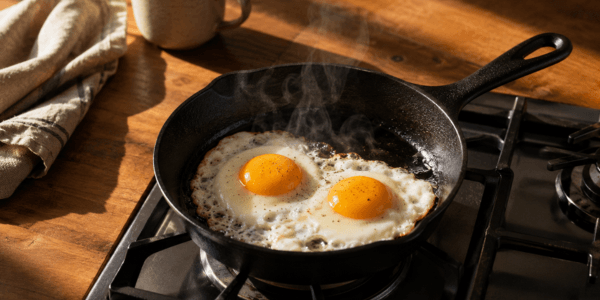
Choosing breakfast cookware sounds simple until you’re standing in an aisle staring at ten different pans, all claiming to be the one your mornings have been missing. We’ve been there. Between coatings, sizes, and features that sound impressive but rarely get used, it’s easy to end up with something that just doesn’t fit the way you actually cook.
Here’s the thing: breakfast cooking has its own rhythm. Eggs, pancakes, bacon, maybe hash browns, all happening fast, often at the same time. The right pan makes that rhythm easier. The wrong one turns a calm morning into a scrubbing session.
We’re not chefs or product testers. We’re just two people who like a good, unhurried breakfast, and we’ve spent a fair amount of time figuring out what actually matters when picking cookware for it. This guide is us sharing that, plainly and honestly.
What Breakfast Cookware Actually Does
Breakfast cookware isn’t just “a pan.” It’s cookware shaped around a specific set of morning tasks: eggs that need gentle, even heat, pancakes that need a flat, wide surface, bacon that needs to render fat without sticking, and sometimes all three within the same fifteen minutes.
That’s different from, say, a stockpot or a general sauté pan built for slow braises or simmering sauces. Breakfast pieces tend to be shallower, lighter, and quicker to heat, because nobody wants to wait ten minutes for a pan to warm up before the coffee’s even done brewing. Responsiveness matters more here than raw heat retention.
Some are single-purpose, like a dedicated egg pan or a small omelet skillet. Others are more of an all-rounder, a wide griddle or a larger skillet that can handle several things at once, sliding an egg to one side while bacon finishes on the other. Neither approach is “better” on its own. It really comes down to how your mornings actually look, and how many hands (and pans) you realistically want going at once, which is exactly what the next section gets into.
What to Look For (Buying Criteria)
Once you know what a piece of breakfast cookware is supposed to do, the actual buying decision gets a lot less overwhelming. Here’s what we’d actually pay attention to.
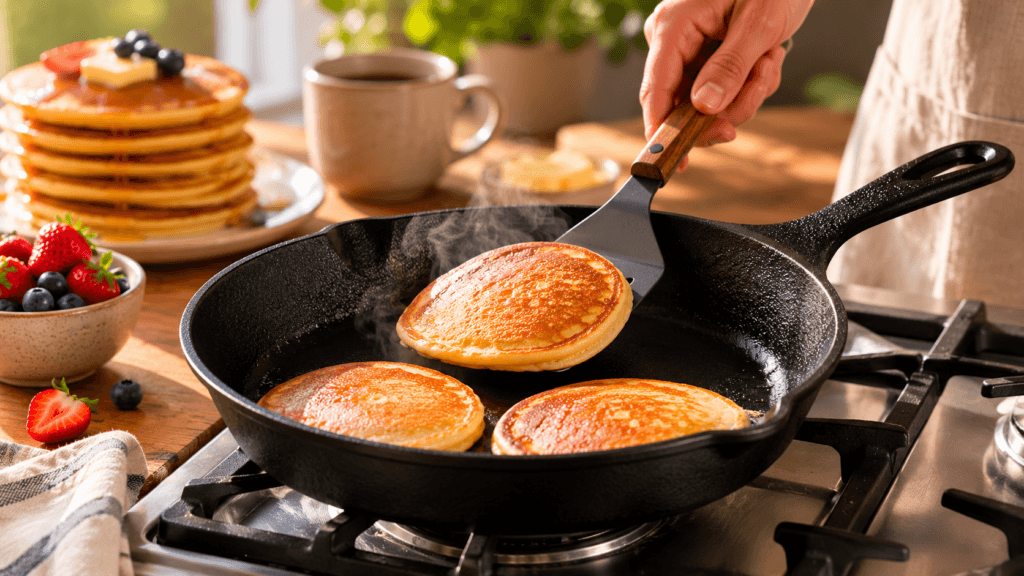
- Size and capacity. Think about who you’re cooking for on a normal morning, not a holiday. A small 8-inch pan is plenty for one or two eggs, but if you’re regularly making pancakes for a family, a wider griddle surface will save you a lot of standing-around-flipping time. Bigger isn’t automatically better if it doesn’t fit your stovetop or your storage space.
- Material and build. Non-stick coatings are popular for breakfast cookware because eggs, in particular, can be unforgiving on bare metal. Cast iron holds heat beautifully and can go the distance for years, but it needs a bit more care. Stainless steel with a non-stick layer, or hard-anodized aluminum, tends to land somewhere in the middle: reasonably easy to use, reasonably durable.
- Ease of use and cleaning. This one gets overlooked constantly. A pan that cooks beautifully but takes twenty minutes of scrubbing afterward tends to get used less and less over time. In general, smoother, well-bonded coatings clean up faster, and dishwasher-safe options (if the coating allows it) are worth checking for.
- Features that matter, and ones that don’t. Even heat distribution matters, a lot. A comfortable, heat-resistant handle matters too, especially if you’re one-handed while holding a spatula or a coffee mug. Pour spouts for batter, divided cooking zones, and lids are genuinely useful for some people. Flashy add-ons that don’t relate to how you actually cook, less so.
- Kitchen fit and space. A gorgeous, oversized griddle isn’t much good if it doesn’t fit your burner, your storage cabinet, or your dishwasher. Measure before you fall in love with something online, and think about where it’ll actually live day to day, not just how it’ll cook.
Common Mistakes to Avoid
The most common mistake we see (and honestly, one we’ve made ourselves) is buying based on looks rather than how the piece actually fits daily use. A beautiful pan that’s too heavy to lift comfortably every morning tends to end up back in the cabinet.
Another one: ignoring heat source compatibility. If you cook on induction, not every pan will work, so it’s worth double-checking before buying, not after unboxing it.
People also tend to chase features they’ll rarely use, like elaborate multi-section griddles, while overlooking simpler things like a comfortable handle or a lid that actually seals well. Worth noting, too, that going for the cheapest possible option often costs more in the long run, since thin, low-quality coatings tend to wear out and need replacing sooner.
Lastly, skipping the cleaning question. If a pan needs hand-washing with special care and that’s genuinely not something you’ll keep up with, it’s worth being honest with yourself about that before buying.
One more small thing: buying a full matching set when you’d really only ever use one or two pieces. It’s tempting, especially when a set looks tidy on a shelf, but a single well-chosen pan usually earns its keep more than five you barely touch.
Who Each Type Suits Best
If you’re cooking breakfast mostly for yourself, a compact, single pan, something like an 8 or 10-inch non-stick skillet, is usually all you need. Less to store, less to clean, and it heats up fast.
Cooking for a family or having people over often? A wider griddle or a larger cast-iron skillet makes more sense, since it lets you cook several servings at once instead of doing eggs in three separate batches.
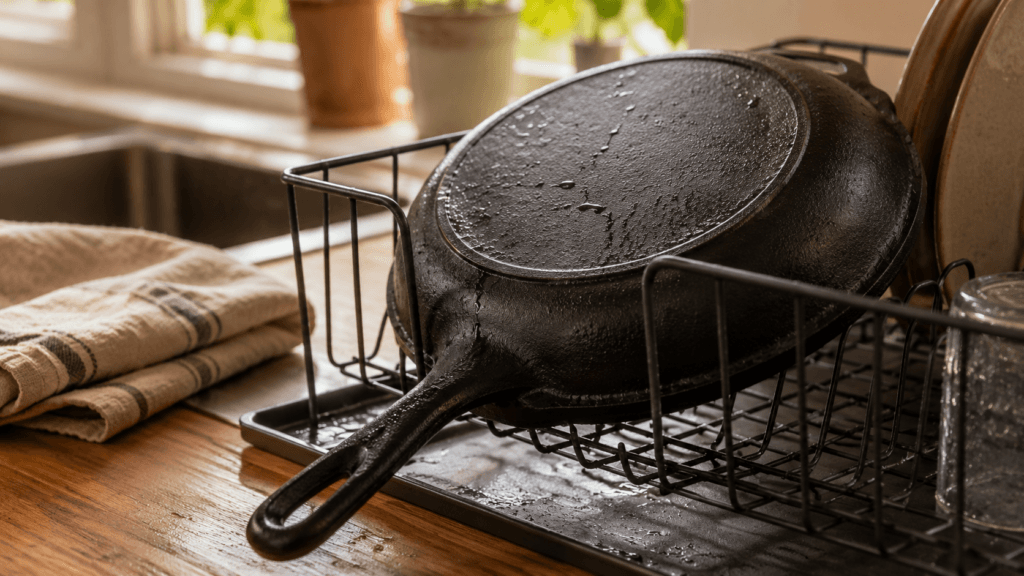
If you genuinely enjoy the ritual of cooking, and don’t mind the extra care involved, cast iron rewards that kind of attention with heat retention that’s hard to beat. If mornings are rushed and low-maintenance is the priority, a quality non-stick piece will likely serve you better day to day.
And if your kitchen is small, or you’re working with limited storage, it’s worth looking at cookware that can pull double duty, an all-rounder skillet rather than three specialized pieces you’ll rarely all use in the same week.
There’s also the weekend cook versus weekday cook distinction. Someone making a slow, unhurried Sunday breakfast has room to enjoy a pan that takes a little more attention. Someone getting kids fed and out the door probably wants something fast, forgiving, and easy to wipe down. Neither approach is wrong, it’s just worth being honest about which one describes your actual week.
Choosing the right breakfast cookware is only one part of creating a better morning routine. From cookware and coffee stations to thoughtful kitchen organization and breakfast rituals, Breakfast Bliss Guide for Calm, Slow Mornings brings together practical ideas for building a calmer, more enjoyable start to every day.
Our Honest Take
Weighing all of this, our honest take is that there’s no single “right” answer, it depends on your mornings, your kitchen, and how much maintenance you’re genuinely willing to do. What we’d say is: get clear on your real routine first, then match the material and size to that, rather than the other way around. Chase the fit, not the features list.
If we’re being real, after going through this whole process ourselves, comparing options and reading through more reviews than we’d like to admit, there’s one piece we kept coming back to more than any other. It just kept making sense for the way we actually cook breakfast. We ended up writing the full story of why in our own honest pick, the Nostalgia Breakfast Station Kitchen Companion, if you’re curious to see what won us over.
Frequently Asked Questions
Is non-stick breakfast cookware worth it? For most people, yes, in general, especially for eggs. Non-stick coatings reduce sticking and make cleanup noticeably easier, though quality varies a lot between coatings, so it’s worth checking how durable a given one is expected to be.
What’s the best material for breakfast cookware? There isn’t one universal answer. Non-stick is typically easiest day-to-day, cast iron tends to last longest with proper care, and stainless or hard-anodized options usually sit in between.
How big should a breakfast skillet be? That depends on how many people you’re usually cooking for. An 8 to 10-inch pan generally suits one or two servings, while a wider griddle or 12-inch-plus skillet fits better for families.
Can breakfast cookware go in the oven? Some can, some can’t, it really varies by piece and material. Cast iron is typically oven-safe, while some non-stick handles or coatings aren’t rated for high oven heat, so it’s worth checking the specifics before assuming.
Is cast iron better than non-stick for eggs? Not necessarily better, just different. A well-seasoned cast iron pan can cook eggs beautifully, but it generally takes more practice and upkeep than a straightforward non-stick pan.
How do I clean breakfast cookware without damaging it? In general, gentle cleaning tools (no metal scouring pads on non-stick), mild soap, and avoiding extreme temperature swings will help any piece last longer, regardless of material.
A Final Word
At the end of the day, breakfast cookware is one of those quiet, everyday tools that makes a bigger difference than it gets credit for. The right piece doesn’t need to be fancy, it just needs to fit how you actually cook, morning after morning.
We hope this made the decision feel a little less overwhelming and a little more like something you can figure out with confidence. Take your time with it. Good mornings are worth getting right.
Curated with care, Jad & Cyprien
For readers ready to see a specific recommendation → link to our picks selection